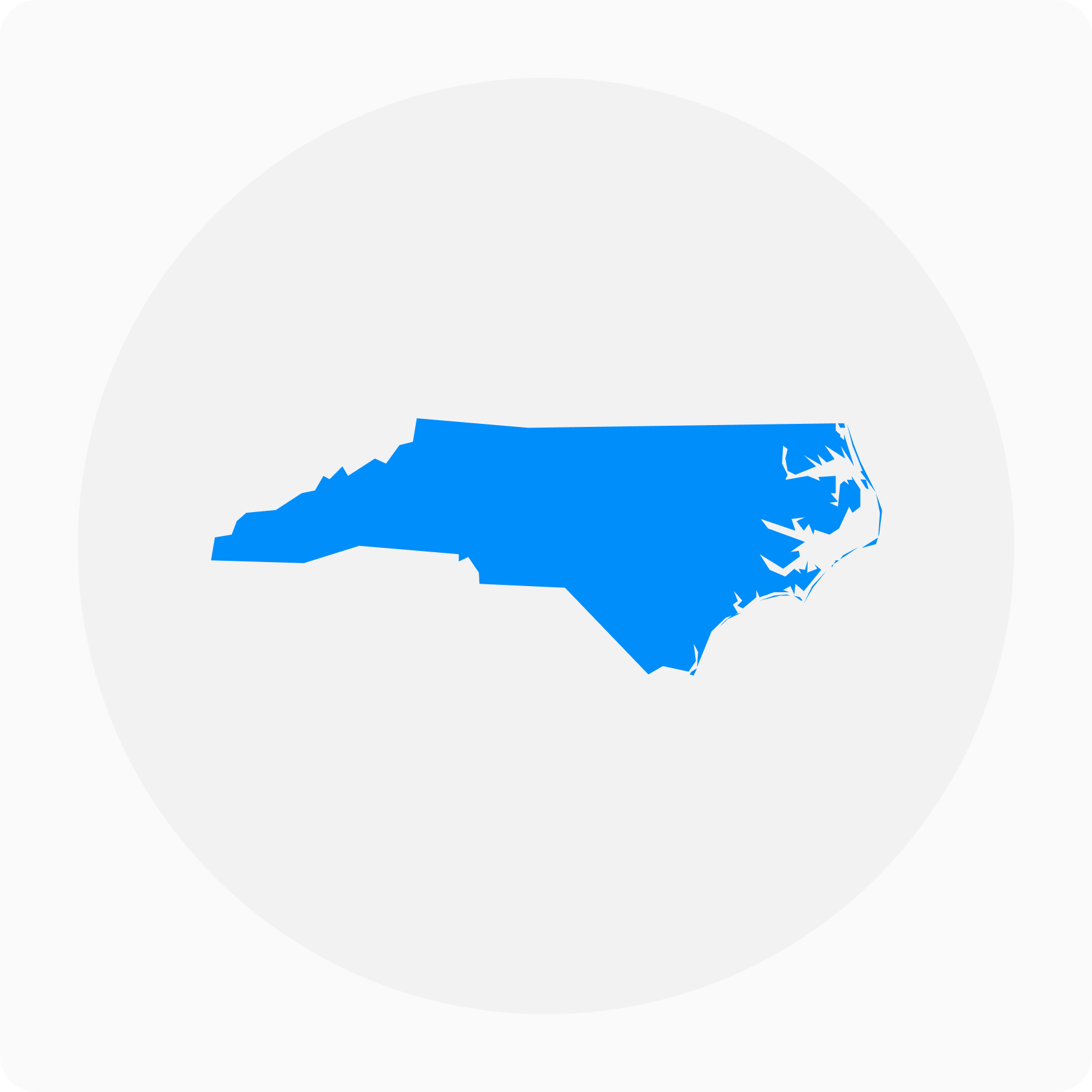
A summary of North Carolina’s collaboration, agreement, filing, supervision, prescribing, and specialty rules for NPs and the physicians who collaborate with them.
Collaborating Physician Required? Yes

Physician Involvement: High for the first six months, then eases to Standard
Agreement Name: Collaborative practice agreement

On-Site Requirements: None

Chart Review: Not a fixed count. A written quality-improvement process for ongoing clinical review is required.
Controlled Substances: Allowed (Schedules II, IIN, III, IIIN, IV, V) with a federal DEA registration; extra consult rules apply to targeted controlled substances
Reduced Supervision / Transition Requirements: Meeting cadence eases from monthly to every six months after the first six months
North Carolina NP Collaboration Requirements Summary
North Carolina requires nurse practitioners to practice under a written collaborative practice agreement with a primary supervising physician. North Carolina is a collaborative-practice state: the NP and physician must be continuously available to each other, and the boards must approve the NP’s application before practice begins. There is no in-person presence requirement, and after the first six months the required meeting cadence eases.
Source: 21 NCAC 36.0810; 21 NCAC 32M.0110
Type of Collaborative Relationship
North Carolina NPs work under a collaborative practice agreement with a primary supervising physician who must be continuously available to the NP, though not physically on-site. Physician involvement is heaviest during the first six months and then eases. North Carolina sets no ratio limit on how many NPs a physician may supervise, and no specific qualifications to be a collaborating physician. There is no independent-practice pathway.
Source: 21 NCAC 36.0801; 21 NCAC 32M.0101
What is an NP’s scope of practice in North Carolina?
North Carolina NPs may assess, diagnose, treat, and prescribe within the drugs, devices, treatments, tests, and procedures set out in their collaborative practice agreement, working under a primary supervising physician.
Do NPs need a collaborating physician in North Carolina?
Yes. North Carolina NPs must practice under a collaborative practice agreement with a primary supervising physician.
Can NPs practice independently in North Carolina?
No. North Carolina has no independent-practice pathway; NPs must work under a collaborative practice agreement with a primary supervising physician.
How many NPs can a physician supervise in North Carolina?
North Carolina sets no limit. There are no ratio limits on how many NPs a physician may supervise.
Who can be a collaborating physician in North Carolina?
North Carolina sets no specific requirement. The rules impose no particular qualifications to serve as a primary supervising physician.
Are there proximity or in-person requirements in North Carolina?
No. North Carolina sets no on-site or travel requirement, but the NP and physician must be continuously available to each other by direct communication or telecommunication.
Collaboration Agreement Requirements
North Carolina’s agreement is called a collaborative practice agreement. It must include the drugs, devices, medical treatments, tests, and procedures the NP may prescribe, order, and perform, and a predetermined plan for emergency services. Both the NP and the primary supervising physician must sign and date it, and a copy must be kept at each practice site. The agreement must be reviewed at least yearly, with the review acknowledged by a dated, signed appendix.
Source: 21 NCAC 36.0810(2); 21 NCAC 32M.0110(2)
What must be included in an NP collaborative agreement in North Carolina?
A predetermined plan for emergency services, and the drugs, devices, medical treatments, tests, and procedures the NP may prescribe, order, and perform. Separately, the clinicians must also maintain a written quality-assurance program for ongoing clinical review, though it need not be part of the agreement itself.
What is the collaborative agreement called in North Carolina?
It is called a collaborative practice agreement — North Carolina’s term for the written arrangement between an NP and a primary supervising physician.
Who has to sign the collaborative agreement in North Carolina?
Both the NP and the primary supervising physician.
How often must the agreement be reviewed or renewed in North Carolina?
At least yearly. The review must be acknowledged by a dated signature sheet, signed by both the NP and the primary supervising physician and appended to the agreement.
Is a backup physician required in North Carolina?
No, a backup supervising physician is not required. If one is used, they must sign an agreement with the NP and the primary supervising physician to provide supervision, consultation, and evaluation when the primary physician is unavailable.
Board Filing Requirements
North Carolina does not require the collaborative practice agreement itself to be filed, but the NP must submit physician information when applying for approval to practice. The NP cannot begin seeing patients until both the Board of Nursing and the Medical Board approve the application. Any change of supervising physician or scope of practice requires re-submission, and the NP must notify the Board of Nursing when a collaboration ends.
Source: 21 NCAC 36.0804; 21 NCAC 32M.0104
Do you have to file the collaborative agreement with the board in North Carolina?
No, the agreement itself is not filed, but the NP must submit the physician’s name or license number and email address when applying for approval to practice.
Can an NP start practicing as soon as they file in North Carolina?
No. Approval to practice must be granted before practice begins; the NP cannot see patients until notified of approval from the Board of Nursing after both boards have approved the application.
What are the termination and notice requirements in North Carolina?
The NP must notify the Board of Nursing in writing immediately when the collaboration ends. The boards may extend an NP’s approval to practice in emergencies such as injury, sudden illness, or death of the primary supervising physician.
Collaboration Compliance
North Carolina requires monthly meetings between the NP and primary supervising physician for the first six months, then at least every six months thereafter. The two must be continuously available to each other by direct communication or telecommunication. There is no fixed chart-review count and no chart co-signing requirement; instead, a written quality-improvement process for ongoing clinical review is required. Documentation of each meeting must be signed, dated, and retained by both clinicians for the previous five calendar years.
Source: 21 NCAC 36.0810(4)–(5); 21 NCAC 32M.0110(4)–(5)
How many charts must a collaborating physician review in North Carolina?
North Carolina sets no fixed count. Chart review is not explicitly required, but the quality-improvement process must include ongoing review of the care provided at each practice site.
How often must an NP and collaborating physician meet in North Carolina?
Monthly for the first six months of the collaboration, then at least every six months thereafter.
How long must collaboration records be kept in North Carolina?
Five calendar years. Meeting documentation must be signed, dated, and retained by both the NP and the primary supervising physician, and available for review by either board.
Prescribing Rules
North Carolina NPs may prescribe controlled substances in Schedules II, IIN, III, IIIN, IV, and V as established in the collaborative practice agreement, provided the NP holds a federal DEA registration and the primary supervising physician holds controlled-substance schedules equal to or greater than the NP’s. For targeted controlled substances (such as opioids and other highly controlled pain medications), extra consultation rules apply. North Carolina sets no additional state credential beyond the DEA registration for prescriptive authority.
Source: 21 NCAC 36.0809(b); 21 NCAC 32M.0109(b)
Can an NP prescribe controlled substances in North Carolina?
Yes. North Carolina NPs may prescribe controlled substances as established in their collaborative practice agreement, with an assigned federal DEA registration entered on each controlled-substance prescription.
Can an NP prescribe Schedule II drugs in North Carolina?
Yes. Schedule II (and IIN) drugs may be prescribed under the collaborative practice agreement with a DEA registration. For targeted controlled substances prescribed by a pain-treatment facility beyond 30 days, the NP must consult the physician before prescribing and at least every 90 days while the prescription continues.
What schedule drugs can an NP prescribe in North Carolina?
North Carolina NPs may prescribe controlled substances in Schedules II, IIN, III, IIIN, IV, and V, as established in the collaborative practice agreement.
Does an NP need a DEA license in North Carolina?
Yes. A federal DEA registration is generally required for the NP, and the NP’s assigned DEA number must appear on each controlled-substance prescription.
Can an NP prescribe independently in North Carolina?
No. NPs prescribe only within the drugs, devices, treatments, tests, and procedures set out in their collaborative practice agreement, and the primary supervising physician must hold controlled-substance schedules equal to or greater than the NP’s.
Specialty & Telehealth Requirements
North Carolina sets no specialty-specific or telehealth-specific requirements for NP collaboration.
Source: 21 NCAC 36.0801; 21 NCAC 32M.0101
Are there telehealth or telemedicine requirements for NPs in North Carolina?
No. North Carolina sets no telehealth-specific requirement for NP collaboration.
Are there specialty-specific requirements for NPs in North Carolina?
No. North Carolina sets no specialty-specific requirement for NP collaboration.
How do you verify a collaborating physician’s license in North Carolina?
Physician license information is submitted through the North Carolina Board of Nursing when the NP applies for approval to practice; the physician’s name or license number is required as part of that application.
Zivian gives you complete, real-time regulatory intelligence for NPs and PAs. Get step-by-step board-filing workflows, compliance and quality assurance tracking, and automatic alerts across all 50 states.