A summary of New Jersey’s collaboration, agreement, filing, supervision, prescribing, and specialty rules for NPs and the physicians who collaborate with them.
Collaborating Physician Required? Yes

Physician Involvement: Standard, then transitions to Independent after 5,000 hours
Agreement Name: Joint protocol

On-Site Requirements: None

Chart Review: Periodic review by the physician and NP; no fixed number set by statute
Controlled Substances: Allowed with a federal DEA registration; no separate state registration; Schedule II capped at a 30-day supply and initial opioid scripts at a 5-day supply

Reduced Supervision / Transition Requirements: Independent practice after 5,000 hours in the NP’s population focus (primary care excluding general obstetrics, or behavioral health only)
New Jersey NP Collaboration Requirements Summary
New Jersey requires most nurse practitioners to prescribe under a written joint protocol with a collaborating physician, but experienced NPs can practice and prescribe independently. Once an NP has more than 5,000 hours of active practice in their population focus and is providing primary health care (excluding general obstetrics) or behavioral health care, they no longer need a joint protocol. New Jersey is a moderate-involvement state: there is no on-site presence rule, no meeting cadence, and nothing to file with the board, but the physician must stay reachable electronically and share periodic chart review with the NP.
Source: N.J. Stat. 45:11-49
Type of Collaborative Relationship
New Jersey ties the collaborative relationship to prescribing rather than to practice itself, and it eases entirely for experienced NPs. An NP who prescribes medications or devices must do so under a joint protocol with a collaborating physician. There is no cap on how many NPs a physician may work with, no experience threshold for the physician, and no geographic or travel requirement.
An NP with more than 5,000 hours of active practice in their population focus may practice and prescribe without a joint protocol, but only when providing primary health care (excluding general obstetrics) or behavioral health care, and not for elective aesthetic or cosmetic services. New Jersey’s rules govern prescribing, so an NP who does not prescribe is not authorized to practice independently on that basis alone.
Source: N.J. Stat. 45:11-49(h)(1)
What is an NP’s scope of practice in New Jersey?
New Jersey NPs may assess, diagnose, treat, and prescribe medications and devices. Prescribing generally requires a joint protocol with a collaborating physician, but experienced NPs meeting the 5,000-hour and practice-area conditions may do so independently.
Do NPs need a collaborating physician in New Jersey?
Usually yes, but not always. An NP who prescribes must work under a joint protocol with a collaborating physician until they qualify for independent practice with more than 5,000 hours in their population focus while providing primary or behavioral health care.
Can NPs practice independently in New Jersey?
Yes, once experienced. An NP with more than 5,000 hours of active practice in their population focus may practice and prescribe without a joint protocol, but only when providing primary health care (excluding general obstetrics) or behavioral health care, and never for elective aesthetic or cosmetic services.
How many NPs can a physician supervise in New Jersey?
There is no limit. New Jersey sets no collaboration ratio, so a physician may collaborate with any number of NPs.
Who can be a collaborating physician in New Jersey?
Any licensed physician. New Jersey sets no experience, specialty, or matching requirements to serve as a collaborating physician.
Are there proximity or in-person requirements in New Jersey?
No. New Jersey has no on-site, proximity, or travel requirement; the collaborating physician only needs to be present or readily available through electronic communications.
Collaboration Agreement Requirements
New Jersey’s agreement is called a joint protocol, and it centers on prescribing. It must spell out the nature of the practice, patient population, and care settings; whether prior consultation with the physician is required before prescribing a controlled dangerous substance or authorizing medical cannabis; the categories of medications appropriate to the practice and any that may be prescribed only at the physician’s direction; recordkeeping methods; the frequency and method of chart review; how the clinicians will communicate and how a back-up physician will be available; emergency medication procedures; and the reference materials or practice guidelines the NP will follow. Both the NP and the collaborating physician must sign it, it must be kept on-site at every office where the NP practices, and it must be reviewed, updated, and signed at least annually by both parties.
Source: N.J. Admin. Code 13:37-8.1(c)
What must be included in an NP collaborative agreement in New Jersey?
The joint protocol must address the practice’s nature, patient population, and settings; medication categories and any drugs restricted to physician direction; recordkeeping and chart-review methods; communication and back-up physician arrangements; emergency medication procedures; and applicable practice guidelines. It must also state whether prior consultation is required before prescribing a controlled dangerous substance or authorizing medical cannabis.
What is the collaborative agreement called in New Jersey?
It is called a joint protocol — New Jersey’s term for the written prescribing agreement between an NP and a collaborating physician.
Who has to sign the collaborative agreement in New Jersey?
Both the NP and the collaborating physician must sign the joint protocol, with an acknowledgment that any violation of the protocol by either party will be reported to their respective licensing board.
How often must the agreement be reviewed or renewed in New Jersey?
At least annually. The joint protocol must be reviewed, updated, and signed at least once a year by both the NP and the collaborating physician.
Is a backup physician required in New Jersey?
A backup physician is not required, but the joint protocol must describe how a backup physician or peer coverage will be accessible and available when the collaborating physician is not.
Board Filing Requirements
New Jersey requires nothing to be filed with the board. The joint protocol does not have to be submitted to the Board of Nursing or Board of Medical Examiners, no additional documents are filed, and there are no recurring filing obligations. Because nothing is filed, there is no board approval step gating the start of practice, and New Jersey sets no termination-notice requirement when a collaboration ends.
Source: N.J. Stat. 45:11-49
Do you have to file the collaborative agreement with the board in New Jersey?
No. New Jersey does not require the joint protocol to be filed with the board; it is developed and kept on-site by the clinicians.
Can an NP start practicing as soon as they file in New Jersey?
There is nothing to file, so no board approval gates the start of practice. Once a valid joint protocol is in place (or the NP qualifies for independent practice), the NP may begin prescribing.
What are the termination and notice requirements in New Jersey?
None. New Jersey sets no termination-notice requirement and no leeway provisions when a collaboration ends.
Collaboration Compliance
New Jersey’s ongoing obligations are light and center on chart review and availability. The collaborating physician and NP must periodically review the charts and records of the patients the NP treats, though the statute sets no fixed number of charts. New Jersey imposes no meeting cadence, no chart co-signing requirement, no separate documentation mandate, and no heightened supervision for controlled substances. The physician’s core duty is to be present or readily available through electronic communications.
Source: N.J. Stat. 45:11-49(10)(c)(6)
How many charts must a collaborating physician review in New Jersey?
There is no fixed number. New Jersey requires the physician and NP to periodically review patient charts and records, with the frequency and method set out in the joint protocol, but the statute prescribes no specific quantity.
How often must an NP and collaborating physician meet in New Jersey?
There is no required meeting cadence. New Jersey sets no minimum frequency for meetings; the physician must be present or readily available through electronic communications.
How long must collaboration records be kept in New Jersey?
New Jersey sets no specific retention period for collaboration records. There is no separate documentation-retention mandate beyond the recordkeeping methods described in the joint protocol.
Prescribing Rules
New Jersey NPs may prescribe medications and devices, including controlled substances, under the terms of their joint protocol, and experienced NPs may prescribe independently. A separate state controlled-substance registration is not required, but a federal DEA registration is needed to prescribe controlled substances. New Jersey applies specific limits to certain prescriptions: Schedule II controlled substances may be authorized only up to a 30-day supply, and an initial opioid prescription for acute pain may not exceed a 5-day supply. Prescription blanks must include the collaborating physician’s full name, address, and telephone number (in inpatient settings, only the physician’s name is required).
Source: N.J. Admin. Code 13:37-7.9A
Can an NP prescribe controlled substances in New Jersey?
Yes. New Jersey NPs may prescribe controlled dangerous substances with a federal DEA registration; the joint protocol must state whether prior consultation with the collaborating physician is required before initiating such a prescription.
Can an NP prescribe Schedule II drugs in New Jersey?
Yes, with limits. Schedule II controlled substances may be authorized only up to a 30-day supply, and an initial opioid prescription for acute pain may not exceed a 5-day supply.
What schedule drugs can an NP prescribe in New Jersey?
New Jersey NPs may prescribe legend (non-controlled) drugs and controlled dangerous substances across the schedules, subject to the quantity limits on Schedule II and opioids and to the terms of the joint protocol. Experienced NPs practicing independently prescribe within the same limits.
Does an NP need a DEA license in New Jersey?
Yes, to prescribe controlled substances. A federal DEA registration is required; New Jersey does not require a separate state controlled-substance registration.
Can an NP prescribe independently (without physician sign-off) in New Jersey?
Yes, once experienced. An NP with more than 5,000 hours in their population focus who provides primary health care (excluding general obstetrics) or behavioral health care may prescribe without a joint protocol; otherwise, prescribing follows the joint protocol.
Specialty & Telehealth Requirements
New Jersey’s main specialty rules involve independent practice and medical cannabis. An NP may prescribe and, with more than 5,000 hours in the applicable population focus, authorize qualifying patients for the medical use of cannabis without a joint protocol — but only when providing primary health care (excluding general obstetrics) or behavioral health care, and never for elective aesthetic or cosmetic services. New Jersey is silent on telehealth-specific collaboration requirements and does not expressly address the collaborating physician’s liability for the NP’s care.
Source: N.J. Stat. 45:11-49(g)(2)
Are there telehealth or telemedicine requirements for NPs in New Jersey?
No. New Jersey sets no telehealth-specific collaboration requirements for NPs.
Are there specialty-specific requirements for NPs in New Jersey?
Yes, tied to independent practice and cannabis. Independent practice and independent authorization of medical cannabis are limited to NPs providing primary health care (excluding general obstetrics) or behavioral health care, and neither is available for elective aesthetic or cosmetic services.
How do you verify a collaborating physician’s license in New Jersey?
New Jersey licenses physicians through the Board of Medical Examiners, whose public license verification lookup lets you confirm a physician’s active status and any disciplinary history.
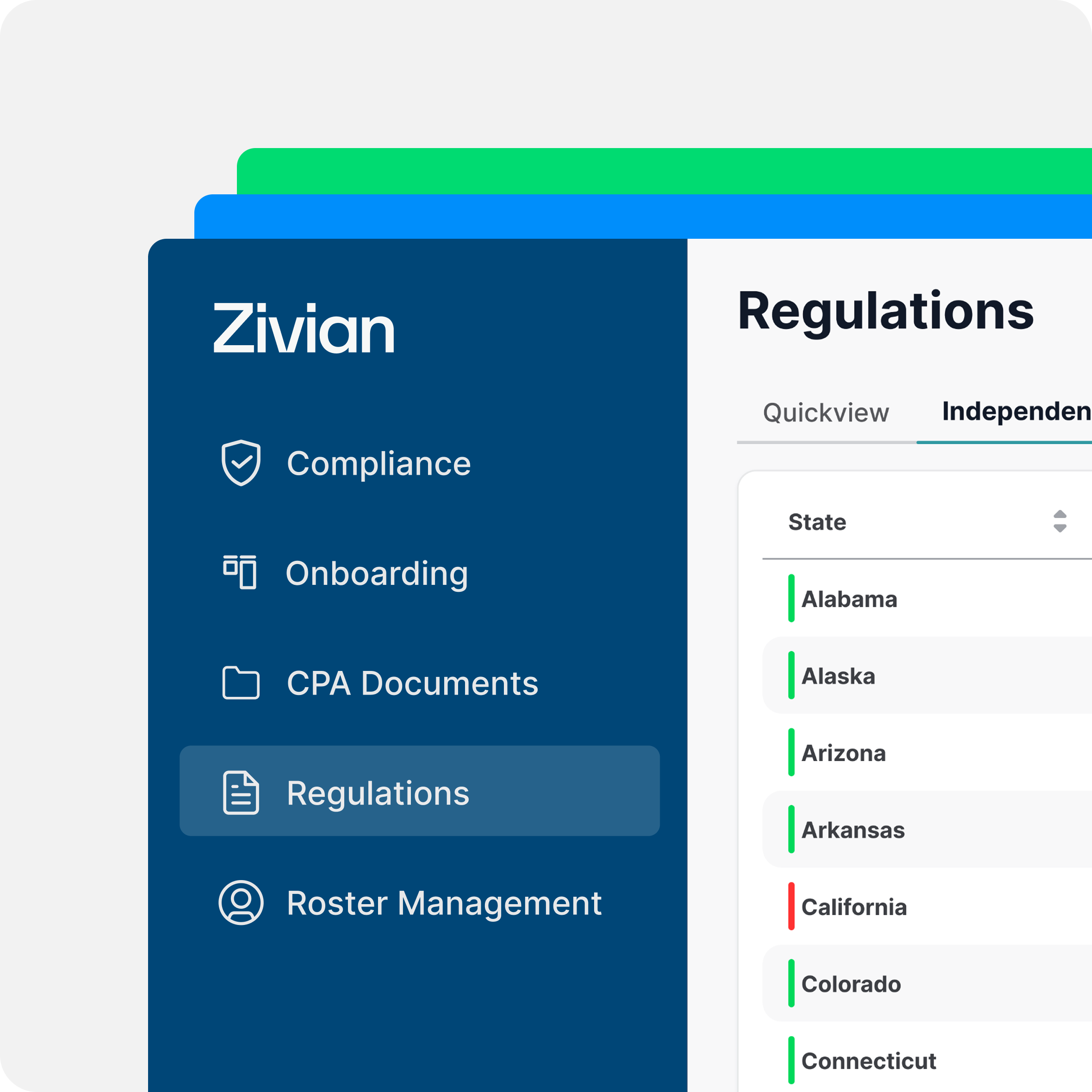
Zivian gives you complete, real-time regulatory intelligence for NPs and PAs. Get step-by-step board-filing workflows, compliance and quality assurance tracking, and automatic alerts across all 50 states.