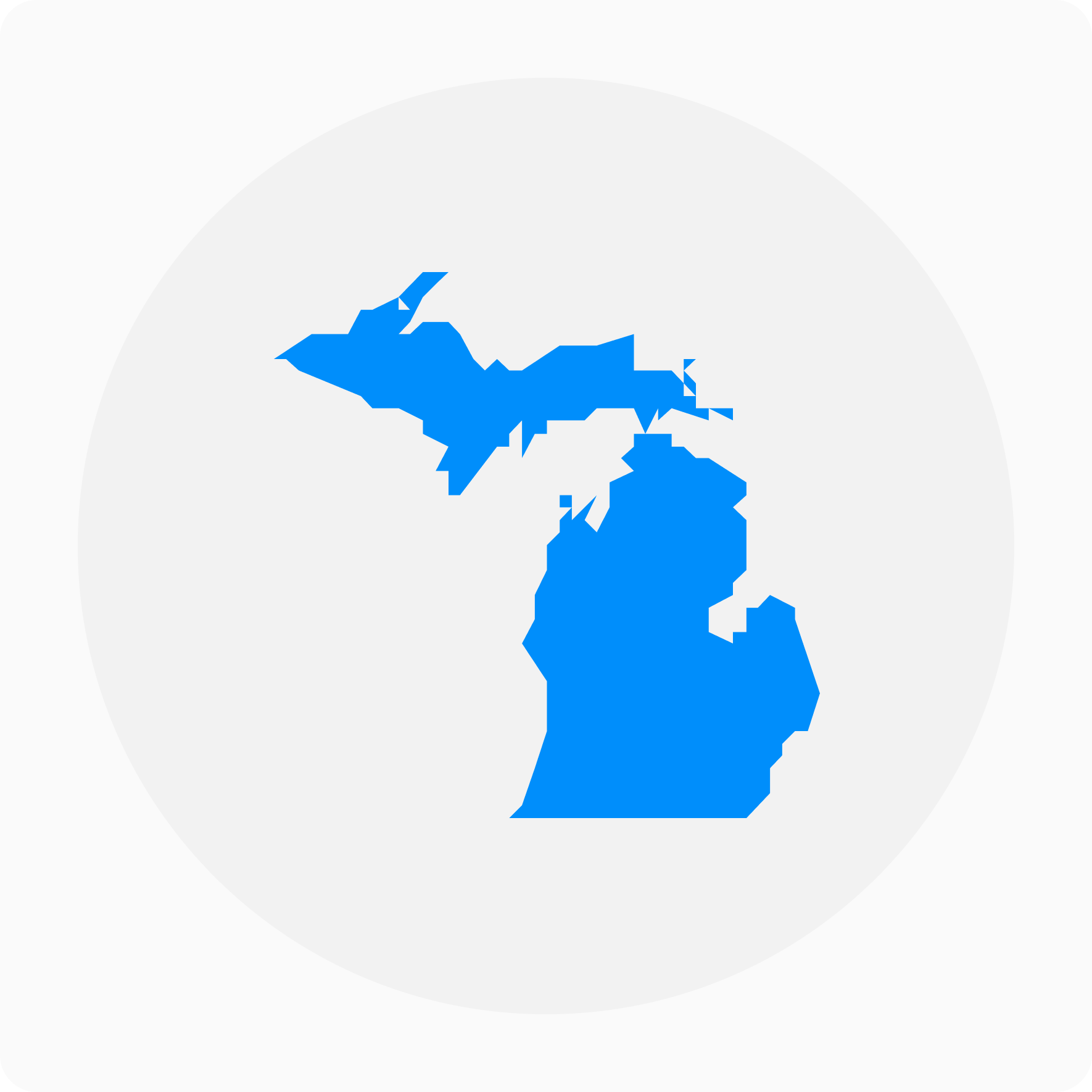
A summary of Michigan’s collaboration, agreement, filing, supervision, prescribing, and specialty rules for NPs and the physicians who collaborate with them.
Collaborating Physician Required? No, in most cases. A collaborating physician is required to prescribe controlled substances or to bill Medicaid.

Physician Involvement: Low
Agreement Name: Written authorization (delegation); Agreement Attestation / collaborative practice agreement for Medicaid.

On-Site Requirements: None.

Chart Review: None required.

Controlled Substances: Allowed as a delegated act of a physician (Schedules II–V); Schedule II limited to a 90-day supply.

Reduced Supervision / Transition Requirements: None.
Michigan NP Collaboration Requirements Summary
Michigan generally does not require nurse practitioners to have a collaborating physician for day-to-day practice. NPs practice largely on their own authority, and a formal physician relationship is triggered only in two situations: prescribing controlled substances, which is a delegated act of a physician, and billing Medicaid, which requires a collaborative practice agreement. There is no in-person, ratio, or transition-to-independence requirement. This page summarizes Michigan’s collaboration, agreement, filing, supervision, prescribing, and specialty rules for NPs and the physicians who collaborate with them.
Source: MCL 333.17211a; Mich. Admin. Code R. 338.119
Type of Collaborative Relationship
A collaborating physician is not required for most Michigan NP practice. NPs work independently unless they prescribe controlled substances (a delegated act of a physician) or enroll to bill Medicaid (which requires a collaborative practice agreement). Michigan sets no ratio limits and no geographic or travel requirements, and there is no formal transition period to reduced supervision because general practice already does not require oversight.
Source: MCL 333.17211a; Mich. Admin. Code R. 338.119
What is an NP’s scope of practice in Michigan?
Michigan NPs may assess, diagnose, treat, and prescribe, and may practice independently for non-controlled care. A physician delegation is needed only to prescribe controlled substances, and a collaborative agreement is needed to bill Medicaid.
Do NPs need a collaborating physician in Michigan?
No, in most cases. A physician relationship is required only to prescribe controlled substances or to enroll with Medicaid; otherwise NPs practice without a collaborating physician.
Can NPs practice independently in Michigan?
Yes, for most care. Michigan NPs practice independently except when prescribing controlled substances or billing Medicaid, which require a physician delegation or collaborative agreement.
How many NPs can a physician supervise in Michigan?
Michigan sets no limit. There are no collaboration ratio limits on how many NPs a physician may collaborate with or delegate to.
Who can be a collaborating physician in Michigan?
Michigan sets no specific eligibility requirements for a collaborating (delegating) physician. The delegating physician must simply be authorized to delegate under Michigan law.
Are there proximity or in-person requirements in Michigan?
No. Michigan has no proximity, on-site, or travel requirement for NPs or collaborating physicians.
Collaboration Agreement Requirements
A written agreement is required only for controlled-substance prescribing or Medicaid billing, not for general practice. For controlled substances, the delegating physician establishes a written authorization identifying both providers by name, license number, and signature, the limitations of the delegation, and its effective date. For Medicaid, the collaborative practice agreement must additionally cover communication and availability, an emergency plan, a process for designating an alternative physician, a description of each party’s duties, and a termination provision. Both the NP and physician sign, and the physician keeps the authorization at their primary place of practice.
Source: Mich. Admin. Code R. 338.119; Medicaid Agreement Attestation
What must be included in an NP collaborative agreement in Michigan?
For controlled substances: both providers’ names, license numbers, and signatures; the limitations of the delegation; and its effective date. For Medicaid, the agreement must also include a communication/availability and emergency plan, a protocol for an alternative physician, a description of each party’s duties, and a termination provision.
What is the collaborative agreement called in Michigan?
It is called a written authorization for controlled-substance delegation, and a collaborative practice agreement (submitted as an Agreement Attestation) for Medicaid enrollment.
Who has to sign the collaborative agreement in Michigan?
The NP and the physician. Both the delegating physician and the nurse practitioner must sign the written authorization (and the Medicaid agreement, where applicable).
How often must the agreement be reviewed or renewed in Michigan?
Annually. The delegating physician must review and update the written authorization each year after the original or amendment date, and must note the review date on the authorization.
Is a backup (covering) physician required in Michigan?
No, not for general practice. For Medicaid reimbursement, however, the agreement must include a protocol for designating an alternative physician for consultation when the collaborating physician is unavailable.
Board Filing Requirements
Michigan does not require NPs to file a collaborative agreement with the board. There are no recurring filing requirements and no termination-notice requirements. The one exception is Medicaid: to be reimbursed, the NP must submit an Agreement Attestation as part of enrollment.
Source: Medicaid Agreement Attestation (Policy Bulletin)
Do you have to file the collaborative agreement with the board in Michigan?
No. Michigan does not require the agreement to be filed with the board. For Medicaid reimbursement, an Agreement Attestation must be submitted as part of enrollment.
Can an NP start practicing as soon as they file in Michigan?
Not applicable. Because Michigan does not require filing a collaborative agreement to practice, there is no filing-based waiting period.
What are the termination and notice requirements in Michigan?
None. Michigan sets no termination-notice requirement for ending a collaboration or delegation.
Collaboration Compliance
Michigan imposes no ongoing chart review, meeting, or availability requirement for general practice. The only ongoing obligations arise under Medicaid: the NP and physician must hold systematic evaluation meetings, document that consultation has occurred, and make periodic formal reports assessing the collaboration. There is no fixed chart count and no co-signature requirement.
Source: Medicaid Agreement Attestation
How many charts must a collaborating physician review in Michigan?
None required. Michigan sets no chart-review requirement. For Medicaid reimbursement, evaluation meetings and documented consultation are required, but no fixed number of charts.
How often must an NP and collaborating physician meet in Michigan?
No meeting cadence is required for general practice. For Medicaid reimbursement, systematic formal planning and evaluation meetings must occur between the NP and physician.
How long must collaboration records be kept in Michigan?
Michigan sets no specific retention period. For Medicaid reimbursement, documentation of consultation and periodic formal reports assessing the collaboration must be maintained; the written authorization is kept at the physician’s primary place of practice.
Prescribing Rules
Michigan NPs may prescribe non-controlled drugs on their own authority and controlled substances only as a delegated act of a physician. An NP may prescribe any non-scheduled prescription drug independently, and may prescribe controlled substances in Schedules II–V when delegated by a physician who holds the required specialty certification. Schedule II prescribing is limited to a total 90-day supply, and controlled-substance prescriptions must show both the NP’s and the physician’s names and DEA registration numbers.
Source: MCL 333.17211a; Mich. Admin. Code R. 338.119(6)
Can an NP prescribe controlled substances in Michigan?
Yes, but only as a delegated act of a physician. Controlled-substance prescribing in Schedules II–V requires delegation from a physician; both the NP’s and the physician’s names and DEA numbers must appear on the prescription.
Can an NP prescribe Schedule II drugs in Michigan?
Yes, as a delegated act, but limited to a 90-day supply. A delegating physician may authorize an NP to issue multiple prescriptions totaling up to a 90-day supply of a Schedule II controlled substance.
What schedule drugs can an NP prescribe in Michigan?
Non-scheduled prescription drugs independently, and controlled substances in Schedules II–V as a delegated act of a physician. Schedule II is capped at a 90-day supply.
Does an NP need a DEA license in Michigan?
Yes, a federal DEA registration is required to prescribe controlled substances.
Can an NP prescribe independently in Michigan?
Yes for non-controlled drugs; no for controlled substances. NPs may prescribe non-scheduled drugs independently, but controlled substances may be prescribed only as a delegated act of a physician.
Specialty & Telehealth Requirements
Michigan sets no telehealth-specific NP collaboration requirements in the source data, and specialty rules apply mainly for Medicaid and clinical nurse specialists. For Medicaid, both NPs and clinical nurse specialists must attest to a valid collaborative practice agreement with a Medicaid-enrolled physician at enrollment and revalidation, and clinical nurse specialists face heightened requirements. Michigan law is silent on explicit physician liability for the NP’s care.
Source: Medicaid Policy Bulletin
Are there telehealth or telemedicine requirements for NPs in Michigan?
No, Michigan does not specify telehealth-related requirements for NPs.
Are there specialty-specific requirements for NPs in Michigan?
Yes, chiefly for Medicaid and clinical nurse specialists. For Medicaid enrollment and revalidation, NPs and clinical nurse specialists must attest to a valid collaborative practice agreement with a Medicaid-enrolled physician, and clinical nurse specialists have heightened requirements.
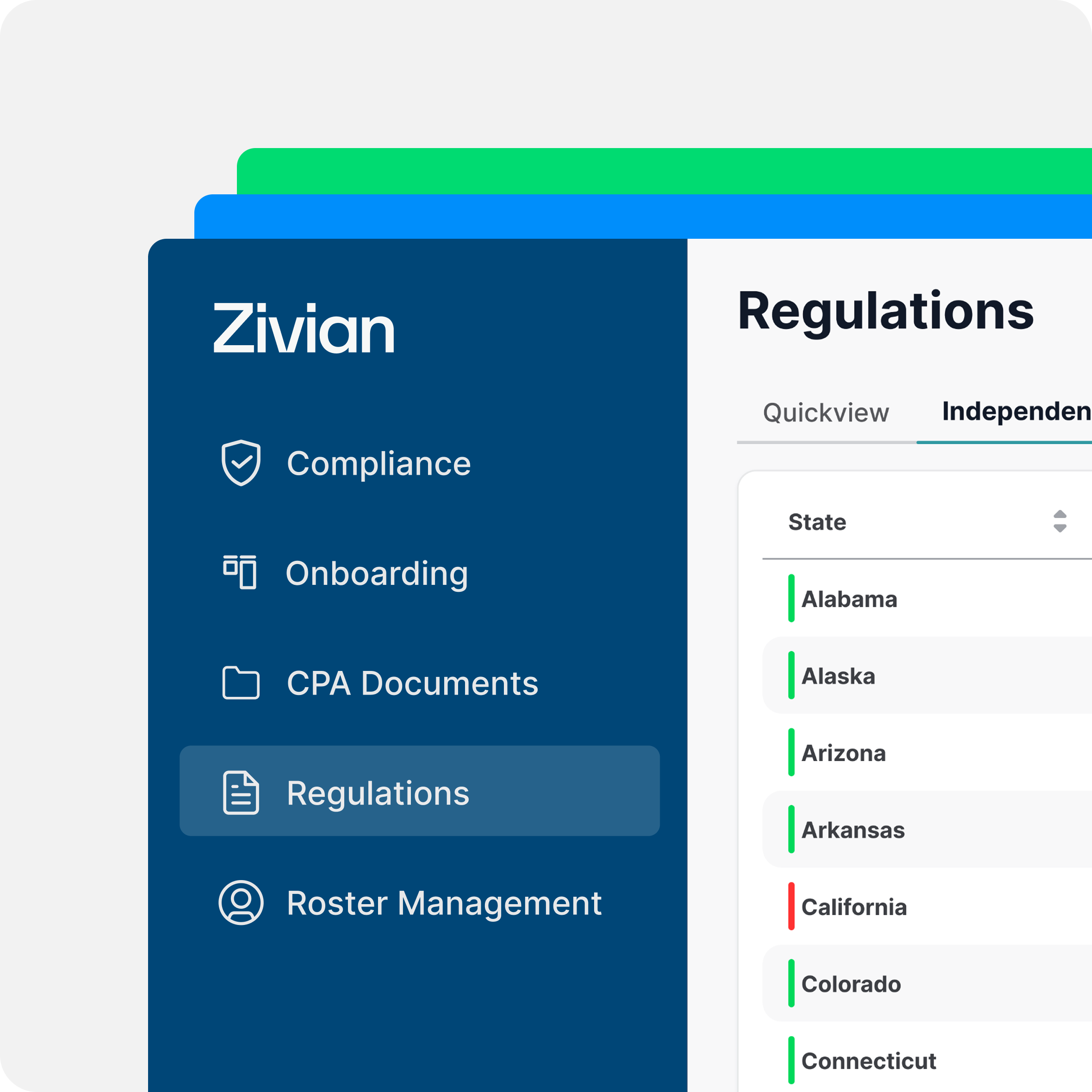
Zivian gives you complete, real-time regulatory intelligence for NPs and PAs. Get step-by-step board-filing workflows, compliance and quality assurance tracking, and automatic alerts across all 50 states.