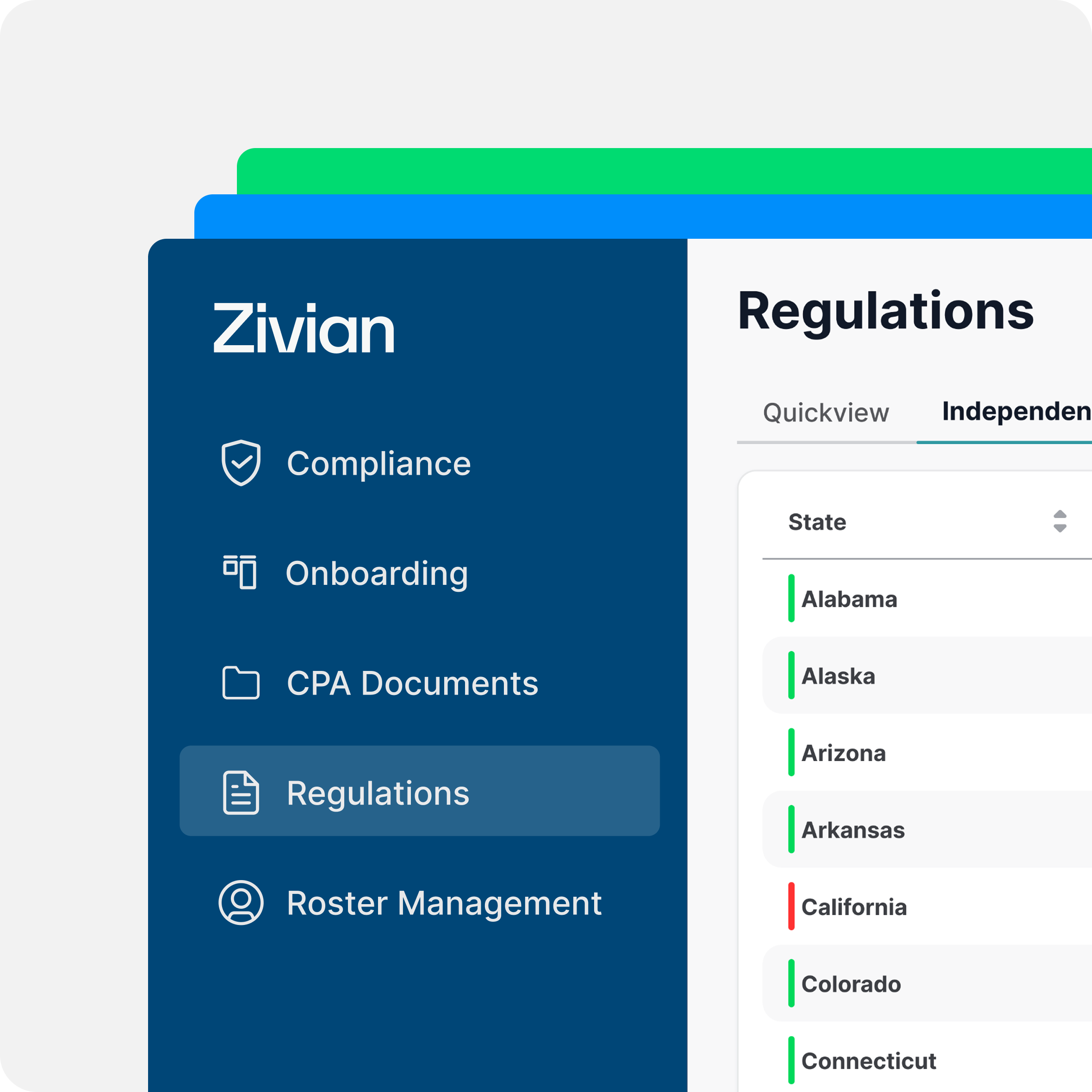
A summary of Colorado’s collaboration, agreement, filing, supervision, prescribing, and specialty rules for NPs and the physicians who collaborate with them.

Collaborating Physician Required? Yes, for prescribing medications

Physician Involvement: Low

Agreement Name: Mutually Structured Mentorship Agreement

On-Site Requirements: None

Chart Review: Not required

Controlled Substances: Allowed, Schedules II–V

Reduced Supervision / Transition Requirements:750-hour prescribing mentorship to transition to Independent practice
Colorado NP Collaboration Requirements Summary
Colorado NPs need a collaborating clinician only temporarily, and only to prescribe. After the Board grants provisional prescriptive authority, the NP completes a 750-hour prescribing mentorship and then gains full, independent prescriptive authority with no collaboration requirement. The mentor can be a Colorado-licensed physician or an NP or certified midwife who holds full prescriptive authority in a corresponding focus, and involvement is light — a self-structured process for discussing prescribing, with synchronous communication required. This page summarizes Colorado’s collaboration, agreement, filing, supervision, prescribing, and specialty rules for NPs and the physicians who collaborate with them.
Source: Colo. Rev. Stat. § 12-255-112(4)
Type of Collaborative Relationship
Colorado NPs need a collaborating clinician temporarily and only to prescribe. After the Board grants provisional prescriptive authority, the NP must complete 750 hours of prescribing under a mutually structured mentorship with a Colorado-licensed physician — or an NP or certified midwife who has full prescriptive authority in a corresponding focus — and may then apply for full, independent prescriptive authority. Physician involvement is low: the collaborators agree on how often they will interact about prescribing and must stay in synchronous contact, with no chart review or on-site requirement.
Source: Colo. Rev. Stat. § 12-255-112(4)
What is an NP’s scope of practice in Colorado?
Colorado NPs (advanced practice registered nurses) practice within their role and population focus and, once they hold full prescriptive authority, prescribe independently. The only collaborative requirement is a temporary prescribing mentorship during the provisional prescriptive-authority phase.
Do NPs need a collaborating physician in Colorado?
Yes. Only temporarily, and only for prescribing. An NP with provisional prescriptive authority must work under a mentor for 750 hours, and that mentor can be a physician or an NP/certified midwife with full prescriptive authority. NPs without prescriptive authority, and NPs who have earned full prescriptive authority, do not need one.
Can NPs practice independently in Colorado?
Yes. Colorado NPs practice independently, and once they complete the 750-hour prescribing mentorship they hold full, independent prescriptive authority with no collaboration requirement.
How many NPs can a physician supervise in Colorado?
There is no limit. Colorado sets no ratio cap on how many NPs a mentor may work with.
Who can be a collaborating physician in Colorado?
A mentor must be practicing in Colorado with education, training, experience, and an active practice that corresponds to the NP’s role and population focus. The mentor can be a physician or an NP/certified midwife who holds full prescriptive authority; for controlled-substance prescribing, a physician mentor must hold an unrestricted DEA registration.
Are there proximity or in-person requirements in Colorado?
No, Colorado sets no geographic or travel requirement. Mentor communication may be remote but must be synchronous (real-time); email does not count as synchronous.
Collaboration Agreement Requirements
Colorado’s written agreement is a Mutually Structured Mentorship Agreement, and the state provides a form. It must be documented in writing and signed, describe the NP’s role and population focus and how the mentorship will prepare the NP to prescribe within that focus, and outline a process and frequency for the NP and mentor to interact about prescribing to assure safe practice.
Source: 3 CCR 716-1.15(G)
What must be included in an NP collaborative agreement in Colorado?
It must be documented in writing and signed, describe the NP’s role and population focus and how the mentorship will prepare the NP to prescribe within that focus, and outline a process and frequency for the NP and mentor to interact about and discuss prescribing practice to assure safe prescribing.
What is the collaborative agreement called in Colorado?
It is called a Mutually Structured Mentorship Agreement, and Colorado provides a state form for it.
Who has to sign the collaborative agreement in Colorado?
The NP must sign it. Colorado’s rule also describes the agreement as signed by the mentor(s), so both parties are commonly signatories, but the state form’s stated requirement is the NP’s signature.
How often must the agreement be reviewed or renewed in Colorado?
Colorado sets no review or renewal requirement for the agreement. The NP and mentor must, however, keep the mentorship agreement for three years after the mentorship ends and make it available to the Board on request.
Is a backup physician required in Colorado?
No, Colorado does not require a backup mentor. If a mentor can no longer continue, though, the NP must secure a replacement and enter a new mentorship, and hours accrued without a mentor do not count toward the 750.
Board Filing Requirements
Colorado requires the mentorship documentation to be filed with the Board before the NP begins the mentorship, but no approval is needed to start practicing — the NP attests that they will not prescribe without a mentor. There are no recurring filing requirements. After the 750 hours, a separate application for full prescriptive authority is required.
Source: 3 CCR 716-1.15(G)(1)(c)
Do you have to file the collaborative agreement with the board in Colorado?
Yes. The NP must submit the mentorship documentation to the Board before beginning the mentorship (before accruing the 750 hours), on a form and in a manner the Board approves.
Can an NP start practicing as soon as they file in Colorado?
Yes. No Board approval is required to begin practicing under the mentorship; the NP attests that they will not prescribe without a mentor supporting the 750 hours of prescribing experience.
What are the termination and notice requirements in Colorado?
Colorado sets no termination-notice requirement. If a mentor stops (through retirement, illness, relocation, or another event), the NP must secure a replacement mentor and enter a new mutually structured mentorship, and any hours accrued without a mentor will not count toward the 750.
Collaboration Compliance
Colorado’s ongoing obligations during the mentorship are light and self-structured. There is no required meeting cadence, chart review, or chart co-signing; the mentor and NP set their own process and frequency for discussing prescribing and must stay in synchronous communication (email does not count). To finish, the NP and mentor provide documentation — currently an attestation by the mentor — that the mentorship was completed successfully.
Source: Colo. Rev. Stat. § 12-255-112(4)(b)(I)(B)
How many charts must a collaborating physician review in Colorado?
There is no fixed number. Colorado does not require chart review or chart co-signing.
How often must an NP and collaborating physician meet in Colorado?
There is no set cadence. Colorado does not mandate a meeting schedule. The NP and mentor set their own process and frequency for discussing prescribing in the agreement, and must maintain synchronous (real-time) communication, which does not include email.
How long must collaboration records be kept in Colorado?
Three years. The NP and mentor must retain the mentorship agreement for three years after the mentorship is completed and make it available to the Board on request.
Prescribing Rules
Colorado NPs may prescribe drugs, including controlled substances in Schedules II–V, once they hold prescriptive authority. Prescriptive authority requires a separate application and an attestation of at least three years of combined clinical experience as an RN or APRN; controlled-substance prescribing requires a valid DEA registration, and a physician mentor must hold an unrestricted DEA registration.
Source: Colo. Rev. Stat. § 12-255-112(4)(a)
Can an NP prescribe controlled substances in Colorado?
Yes. An NP with prescriptive authority may prescribe controlled substances in Schedules II–V, provided they hold a valid DEA registration and follow all DEA requirements; a physician mentor must also have an unrestricted DEA registration.
Can an NP prescribe Schedule II drugs in Colorado?
Yes. Colorado NPs with prescriptive authority and a valid DEA registration may prescribe Schedule II drugs (Colorado authorizes Schedules II–V).
What schedule drugs can an NP prescribe in Colorado?
Colorado NPs with prescriptive authority may prescribe controlled substances in Schedules II–V, plus non-controlled prescription drugs, within their role and population focus.
Does an NP need a DEA license in Colorado?
Yes, for controlled substances. An NP must hold a valid DEA registration to prescribe controlled substances (Schedules II–V) and adhere to all DEA requirements; a physician serving as mentor must hold an unrestricted DEA registration.
Can an NP prescribe independently in Colorado?
Yes, after earning full prescriptive authority. Once an NP completes the 750-hour mentorship and is granted full prescriptive authority, they prescribe independently, with no collaboration or sign-off. During the provisional phase, prescribing happens under a mentor, though Colorado does not require the mentor to co-sign prescriptions.
Specialty & Telehealth Requirements
Colorado sets no telehealth-specific or specialty-specific collaboration requirement in the source, and its rules do not make the mentor automatically responsible for the NP’s care. The one focus-related rule is that the mentor’s practice must correspond to the NP’s role and population focus.
Source: Colo. Rev. Stat. § 12-255-112(4)(b)
Are there telehealth or telemedicine requirements for NPs in Colorado?
No, Colorado sets no telehealth-specific collaboration requirements. During a mentorship, mentor communication may be remote but must be synchronous (not email).
Are there specialty-specific requirements for NPs in Colorado?
No, Colorado sets no specialty-specific requirements, though the mentor’s education, training, and active practice must correspond to the NP’s role and population focus.
Zivian gives you complete, real-time regulatory intelligence for NPs and PAs. Get step-by-step board-filing workflows, compliance and quality assurance tracking, and automatic alerts across all 50 states.