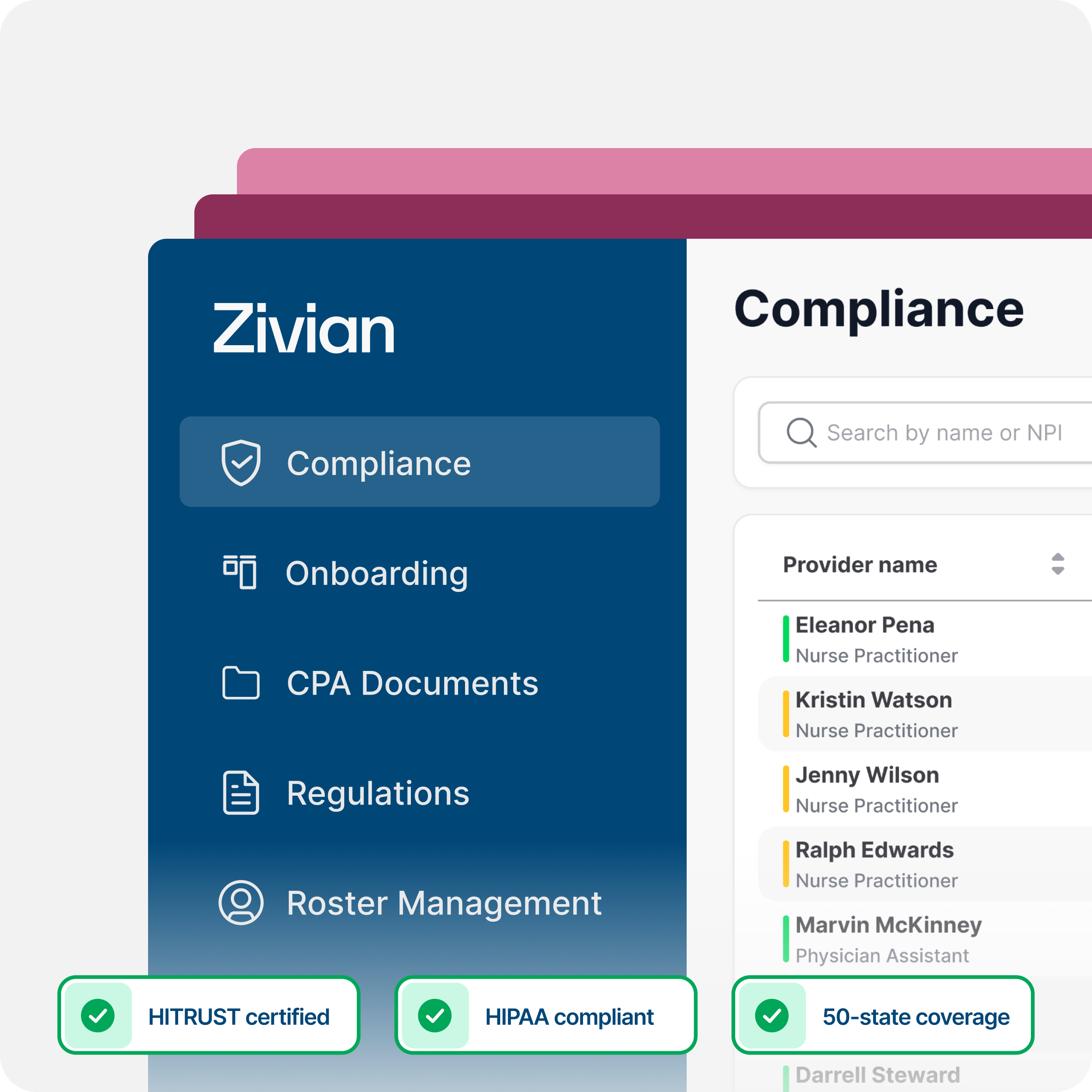
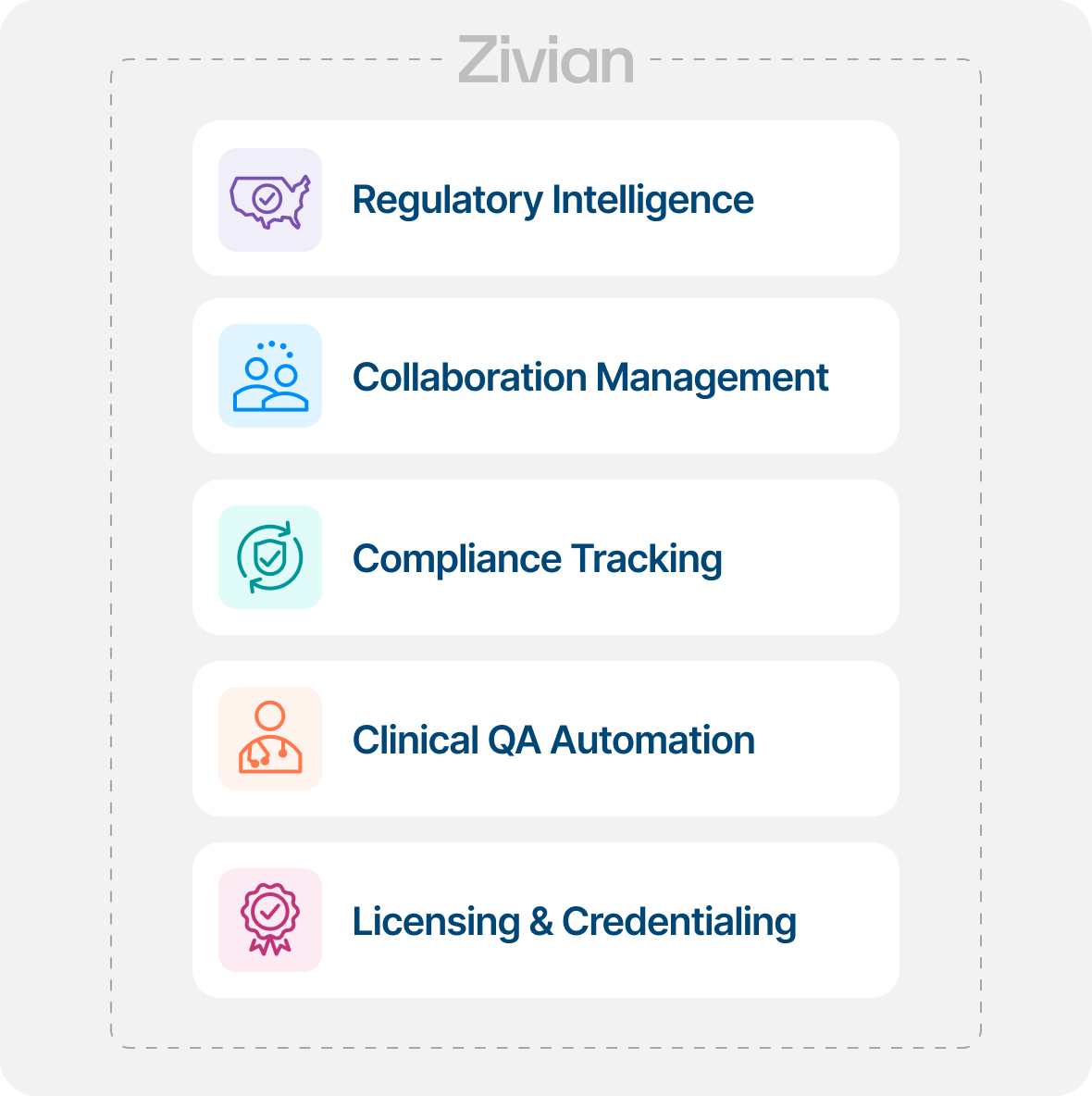
Matching yourself and negotiating your own rate is an option. But then you take on self-managed compliance. Zivian matches you with a physician and then runs board filings, state rules, and ongoing compliance for you.




















Single Aim lets me negotiate my own rate. Is Zivian more expensive?
It depends what you are comparing. Single Aim publishes physician pay from roughly $450 to $750 a month, and that is the physician’s rate. Zivian’s collaboration pricing begins at $500 for small practices and may increase depending on physician specialty requirements and regulatory factors. But your Zivian rate covers your physician, malpractice coverage, the legally vetted agreement, free rematching and the compliance platform in one figure.
For enterprise organizations who require collaborations at scale, Zivian provides discounted rates based on your organizations needs and regulatory requirements.
They give me compliance templates and resources. Is that not enough?
Templates are useful on day one. Compliance gaps tend to show later. A template can’t tell you that your state changed its chart review rules, that a renewal is due, or that a board filing is outstanding. And documenting that you’ve adhered to these rules is up to you. That’s the difference between knowing the rule and being able to prove you followed it.
What are the differences in how you handle matching fees?
Single Aim’s published terms are that 50% of the first month is due when you match, with a start date inside 60 days. Zivian has no upfront or onboarding fees. Zivian matches you within 1-2 weeks of your chosen start date, and billing begins when you sign your collaboration agreement.
I want to choose my own physician. Do I lose that with Zivian?
No. You meet your match and confirm the fit before anything is signed. The major difference is that your Zivian physician match is made against your state’s requirements and your clinical requirements rather than left to you to verify.
Can you cover restrictive states?
Zivian covers all 50 states and D.C., and the restrictive ones are where we lead, like Georgia, Texas, and Alabama.


