Recently, at our annual company offsite in Austin, we ran an AI hackathon. Cross-functional teams of four, at least one engineer on each, had four hours to ship something that would actually move the needle for Zivian or the customers we serve.
I want to tell you what happened, because I’m still buzzing about it.
At Zivian, we spend our time solving operational problems that sit between clinicians and patient care—regulatory friction, manual workflows, things that don’t scale. Rather than just building fast, the hackathon was about taking those kinds of problems and seeing what AI could actually do with them in a few hours.
About half of the people in the room had never participated in a hackathon before. Four hours is not a lot of time. And the bar we set was not “build something fun.” It was to demonstrate impact, grow top-line revenue, cut the manual hours our teams spend each day, or do something that genuinely wasn’t possible before AI got this good.
And it worked.
Why we did this at the offsite
The offsite already brings everyone together. A hackathon felt like the right thing to bolt onto it: a structured opportunity to work on a real problem that matters to Zivian, alongside teammates you don’t usually sit next to, with some genuinely powerful AI tools that can do a lot of the heavy lifting.
That last part is worth lingering on. The reason this works in four hours now, and didn’t two years ago, is the tools are different. AI compresses days into hours and, for some problems, makes possible what wasn’t possible at all. We wanted the team to feel that, not in the abstract, but with their hands on the keyboard.
The mindset
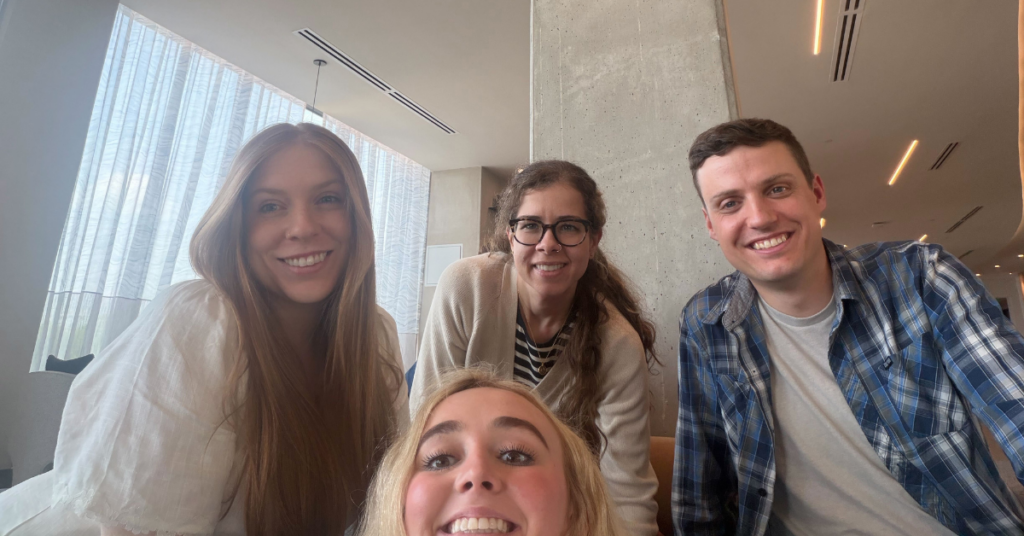
Going in, I told everyone the same thing I’ll tell you: the hardest part is giving yourself permission to start before you feel ready.
Hackathons don’t reward the most polished idea in the room. They reward the team that picks up the marker and starts drawing. The teams that build on each other’s ideas tend to be the ones that get somewhere interesting fastest.
How we picked problems
We gave the teams a handful of problem statements and four questions to filter against.
Is the problem you’re solving felt, not theoretical? Is someone on our team or in our customer base actually experiencing this today? Real friction beats interesting hypotheticals every time. Name the customer in your demo.
Can you demonstrate the impact? Can you show what better looks like, even roughly? A faster workflow, a question answered in seconds instead of hours, a process that no longer requires a human to babysit it. If you can show the delta between before and after, that’s real impact.
Can it be scoped to half a day? You are not rebuilding the platform in Austin. You are finding the smallest slice of a solution that proves the concept works. What’s the version of this that fits in four hours and still makes the room say, “oh, that’s interesting”?
Can AI meaningfully help? The whole point of this hackathon was to explore what becomes possible when we put these tools to work on real business problems. The best problems are the ones where AI compresses days into hours, or does something that simply wasn’t possible before.
What happened
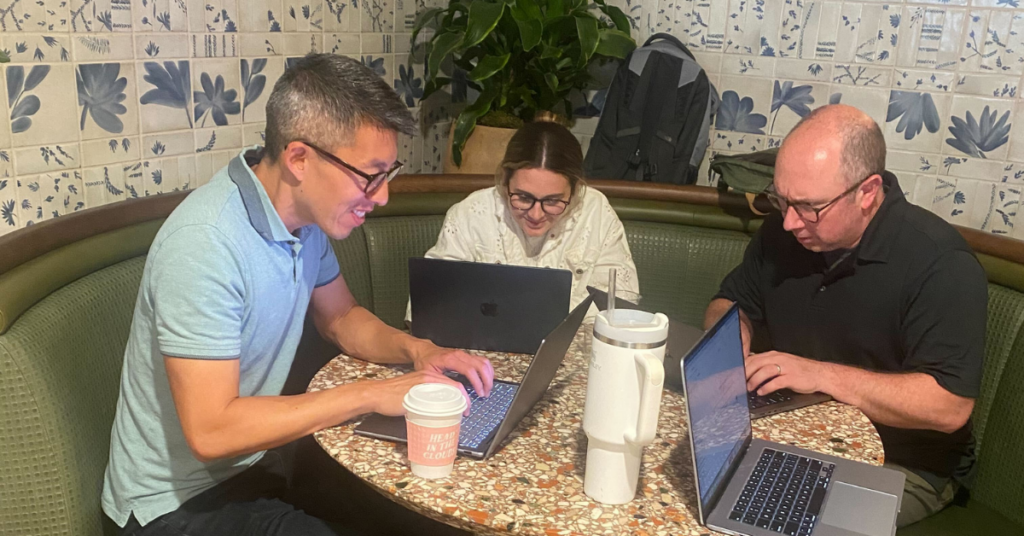
Here’s where I get to brag.
One team built a prototype that pulls together everything we know about a potential customer—calls, notes, research—and turns it into a comprehensive picture of how to engage them and solve their specific business problems.
Another team built a way to automatically match NPs and PAs with collaborating physicians based on patterns that drive long-term, successful clinical relationships.
And another built a simple way to turn general compliance content into personalized insights in just a few clicks.
One project is already in production. Already. Live. Doing the thing.
The winning team’s project is being refined now and will be in production in a couple of weeks.
The sales team walked away with new tools they’re already using.
And the rest of the projects landed on the near-term roadmap. I cannot wait to bring those into production too.
What I’m taking from this
A few things stuck with me.
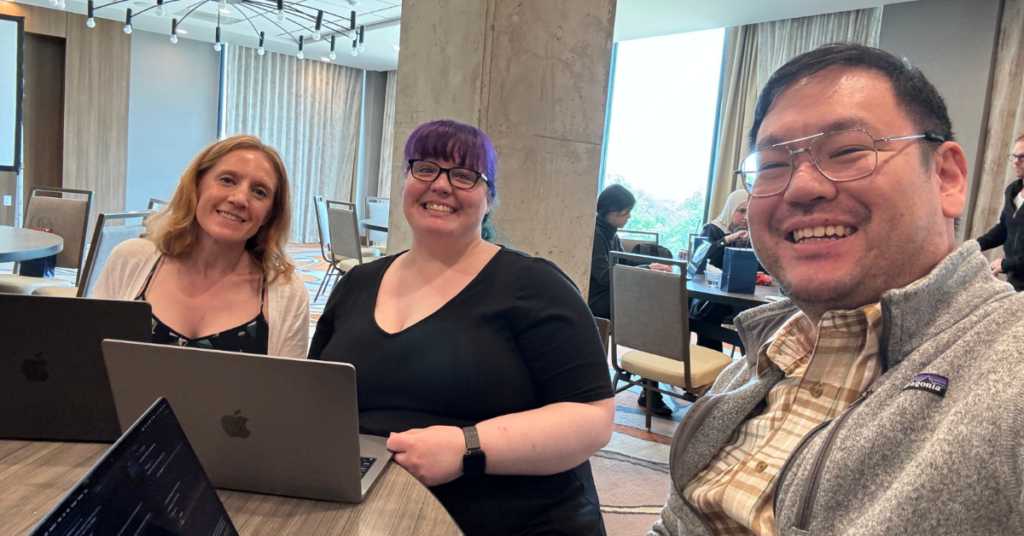
The first is how quickly cross-functional teams converged on real customer pain when we gave them permission to. Engineers and non-engineers found their roles fast.
The second is how generous people were with each other; yes, and showed up everywhere. The third, maybe the one I’ll keep returning to, is that permission to start before you feel ready might be the most important muscle a company can build right now. Others call it bias for action, the time is now, t=0!
The tools have changed, what they unlock is real, and the way you find out what’s possible isn’t a six-month roadmap. It’s four hours, a real problem, and a team willing to start.
More to come as these projects ship. Watch this space.
– Vanessa DeGennaro, VP Engineering